
The Intimacy Barrier
Bruce Perry has a specific concept he calls “intimacy barrier” (see his video about it here). The concept describes how people develop templates relationships in their early lives and use them to have different interactions in different contexts (casual, routine, school, work, personal, intimate, etc.).
The intimacy barrier is the space between what feels safe and unsafe (or threatening). For instance, if you are a hugger, you may hug a friend and that will feel safe. For non-huggers, that will feel unsafe, maybe too intimate.
What Bruce Perry argues, is that based on early relational templates, where the barrier sits may look different. For instance, if someone has had negative relational experiences, they may thrive on casual relationships, but find closer, deeper relationships much more challenging.
Another point he makes is that what helps with the barrier is the sense of control someone would have. You may not like hugs, but if you are in control of whom and for how long someone hugs you, then it may feel safer.
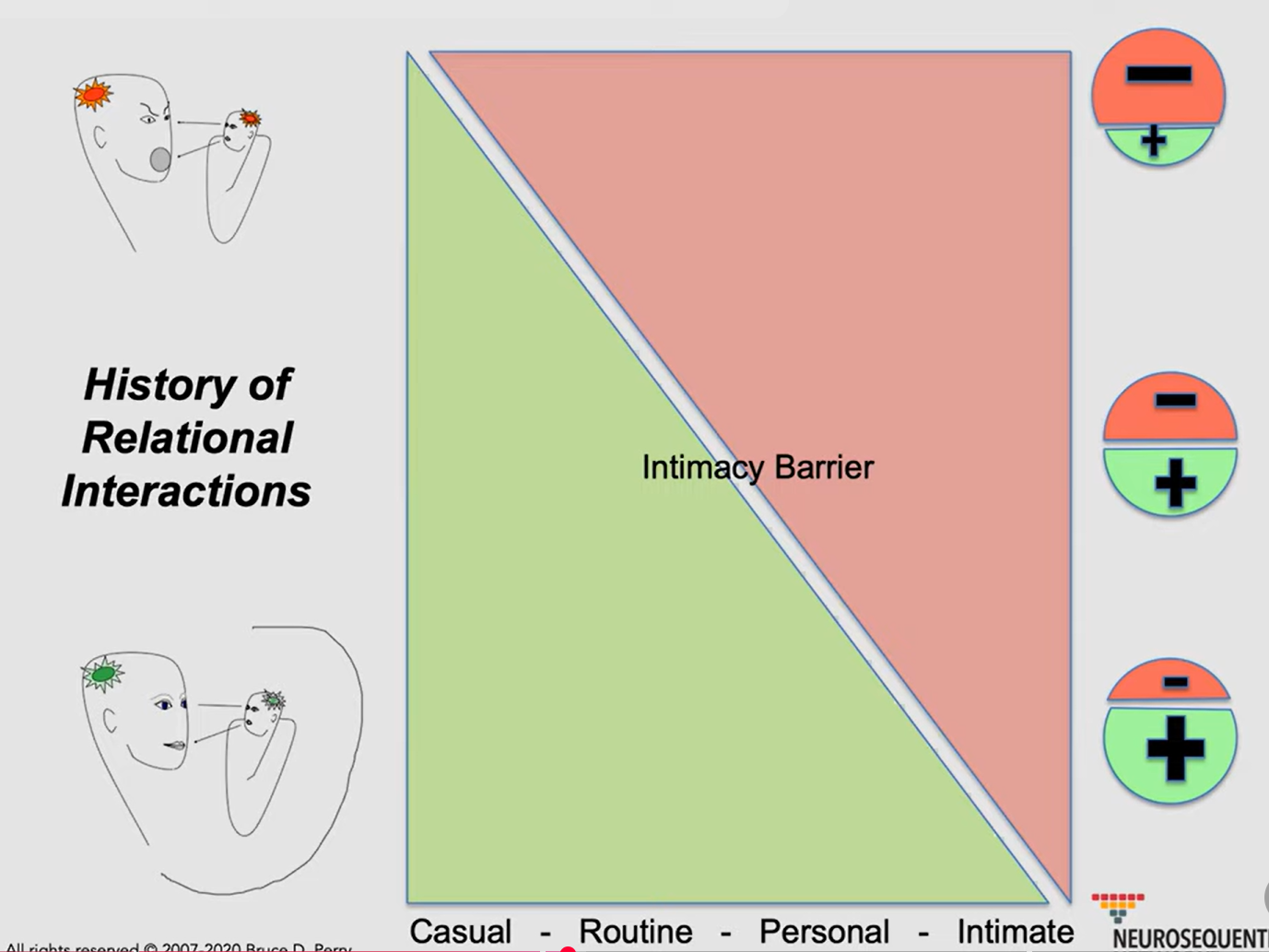
Here is an image from his video I linked earlier. It’s a visual to go along with what I describe in the text above.
What does this mean clinically?
The intimacy barrier is important when working, or being, with individuals who have experienced developmental trauma. The concepts helps us stay curious with the people we interact with to better get to know where their intimacy barrier stands.
It reminds us that a sense of control for them will be important, and hopefully helps us think that if someone has a very strong reaction to us being physically too close to them, or if we touched their arm, for instance, it may not be personal, but rather, something to do with us crossing their intimacy barrier.
Even better, we can start being curious about where our own intimacy barrier sits. And how is that different or similar to people close to us?
How do I feel if let’s say my family member has an intimacy barrier very different from mine? What meaning do I make of this? How can we have a conversation about this together?
