
Counsellors, Psychotherapists, Psychologist, Psychiatrists: What are the differences?
If you are looking for help, it can be confusing to search for mental health support. There are a few different professions and unless you are in the field, it can be confusing.
Now, you may not care, but if you do, I hope to bring some light to the best of my knowledge. The table below summarises my current understanding.
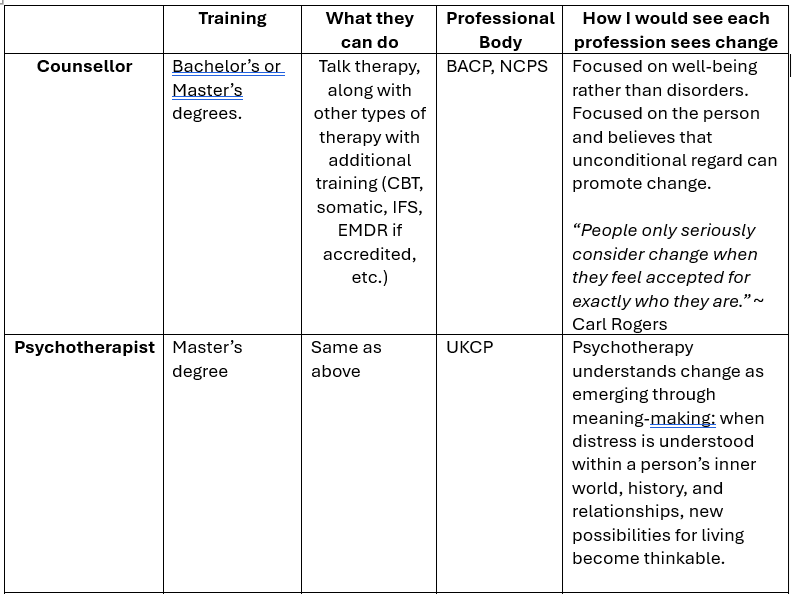
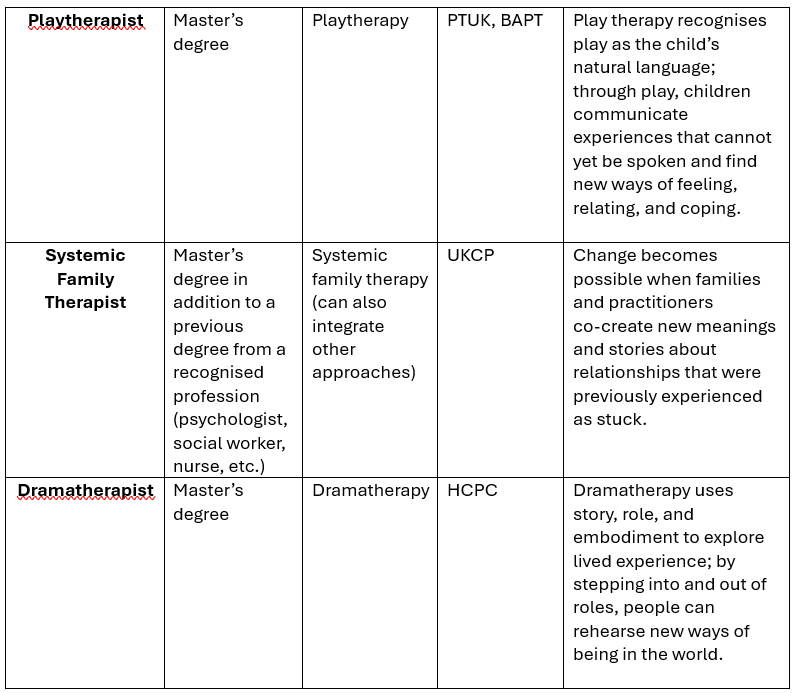
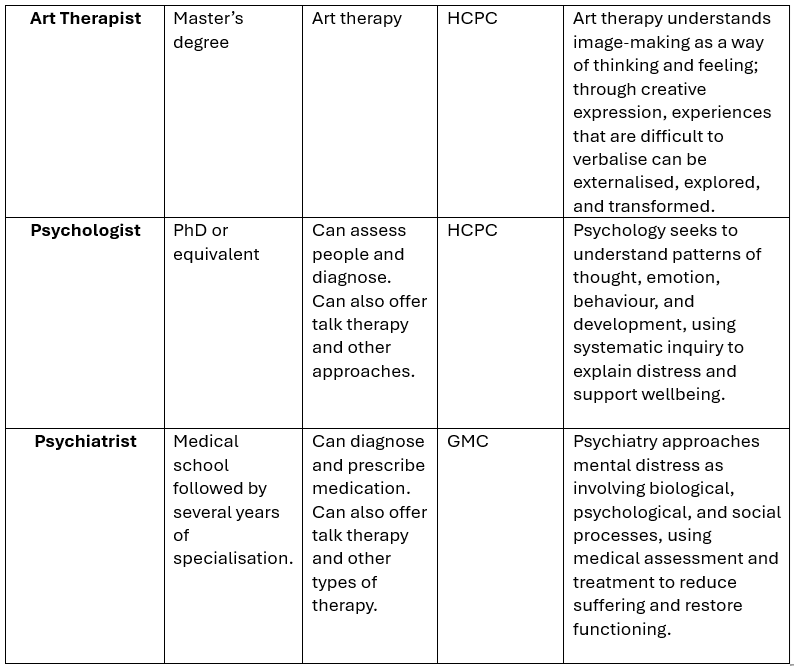
While I was trained as a counsellor, I was trained in the USA, which is a different training and context. First, the counselling profession, after a long history (counselling first came from vocational counselling with Frank Parsons (see this article for a brief history of counselling in the USA) is a recognised profession.
This means that the power held in society and recognition by other health professional is the same as nurses, psychologists, and psychiatrists. Because of the private health care system, it also means that counsellors in the USA need to be able to diagnose to work with insurance companies.
The way I describe the training of counselling in the US is as the medical model, but with the underpinning of person-centered approaches and focus on well-being, rather than focusing on disorders.
Since, I have also started my studies in systemic practice, which has fundamentally added to my practice in many ways. One of which is to consider that problems don’t live in individuals, but are defined and held within relationships and patterns within systems.
As a last note, because of its history, counselling and psychotherapy has always wanting to be different compared to the medical model. That means that in the UK, counselling and psychotherapy do not belong to recognised professions. For people looking for a therapist it means to ensure you check your therapist is registered with one of the bodies mentioned above as it means they have the appropriate training and vow to follow their respective codes of ethics.
