
Sequential Development of Empathy
Bruce Perry is very clear in his courses and his books, such as “Born for love”, that children need to experience empathy (and love) first and foremost before they can develop it for others.
In addition, Bruce Perry argues that the development of empathy is sequential.
The way Bruce Perry thinks about it is:
Infants will bond with their primary carers
Through that bond, infants and toddlers will be co-regulated and over time start to develop the skills required for self-regulation
Once children start to self-regulation, they can start to become aware of the own group they belong to (Bruce Perry calls it affiliation)
Once a child has more of sense of sense through self-regulation and affiliation, they will start become curious about others and slowly start to develop awareness that others may have different thoughts, feelings, and wishes than their own (also called theory of mind)
The next step after developing a theory of mind and be aware that others may have different views, the following stage is tolerance. It is not just different than my own beliefs, but different does not have to mean some beliefs are better or worse. And we can live together while holding different beliefs
The final stage, according to Bruce Perry is when someone not only tolerates difference, but also sees diversity as necessary and vital to help us grow as human being and support the development of our creativity and critical thinking
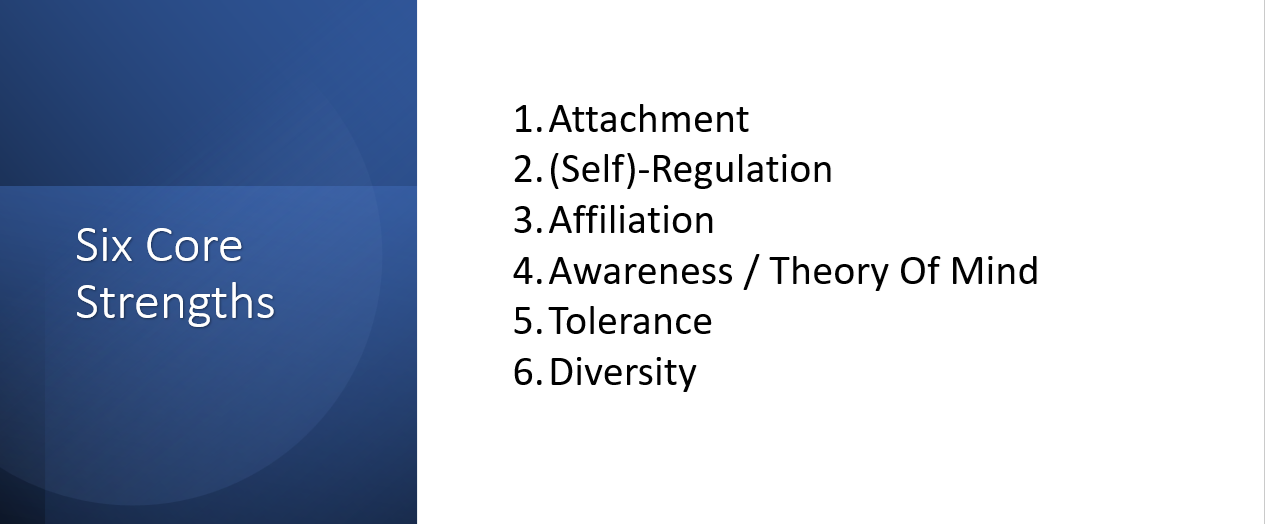
Developmental stages to empathy, tolerance, and diversity according to Bruce Perry.
What does this mean in practice?
In practice this means that one cannot expect individuals (particularly children and adolescents) to be tolerant and empathetic of others, if they have not experienced it themselves. They may not have developed trust that adults will meet their needs if they were to express them. If that’s the case, we need to slowly and therapeutically walk along their side.
